The Haitian Flag
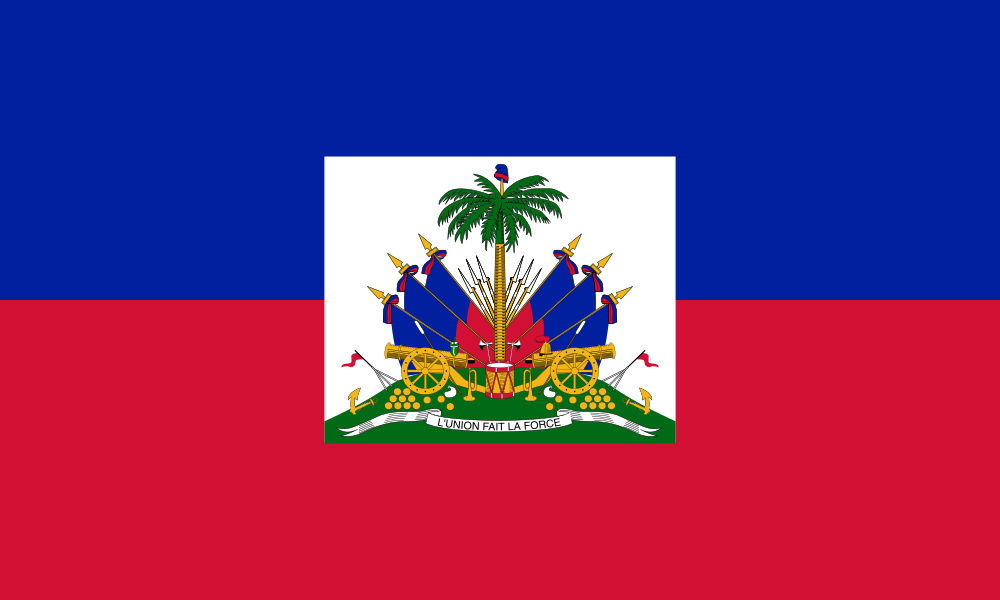
“L'Union Fait La Force” — since 18 May 1803
The blue-and-red flag is one of the greatest symbols of Haitian identity and pride. But its story is long: it changed several times since independence, between blue-red and black-red, depending on who was leading the country. Here is how the flag evolved.
How the flag evolved
The flag is born
By tradition, at the Congress of Arcahaie, Dessalines tore the white out of the French flag and Catherine Flon sewed the blue and red together. Its first form was vertical.
blue–red · verticalBlack and red
At independence (1 January 1804) the flag became horizontal, blue over red. In 1805, Emperor Dessalines changed the blue to black and made it vertical.
black–red · verticalThe Republic and the arms
Haiti split in two. In the south, Pétion restored the horizontal blue-red and added the coat of arms with the motto “L'Union Fait La Force.” In the north, Christophe kept black-red.
blue–red + armsOne Haiti again
Boyer reunified the country after Christophe's death; the horizontal blue-red flag became the flag of the whole nation.
blue–red · horizontalThe dictatorship's change
Duvalier replaced the blue with black — the flag became black-red and vertical, and he removed the liberty cap from the coat of arms.
black–red · vertical
The flag returns
After Duvalier fell, the people restored the blue-red flag — with the liberty cap back in the coat of arms. The 1987 Constitution confirmed it.
blue–red + armsThe Coat of Arms
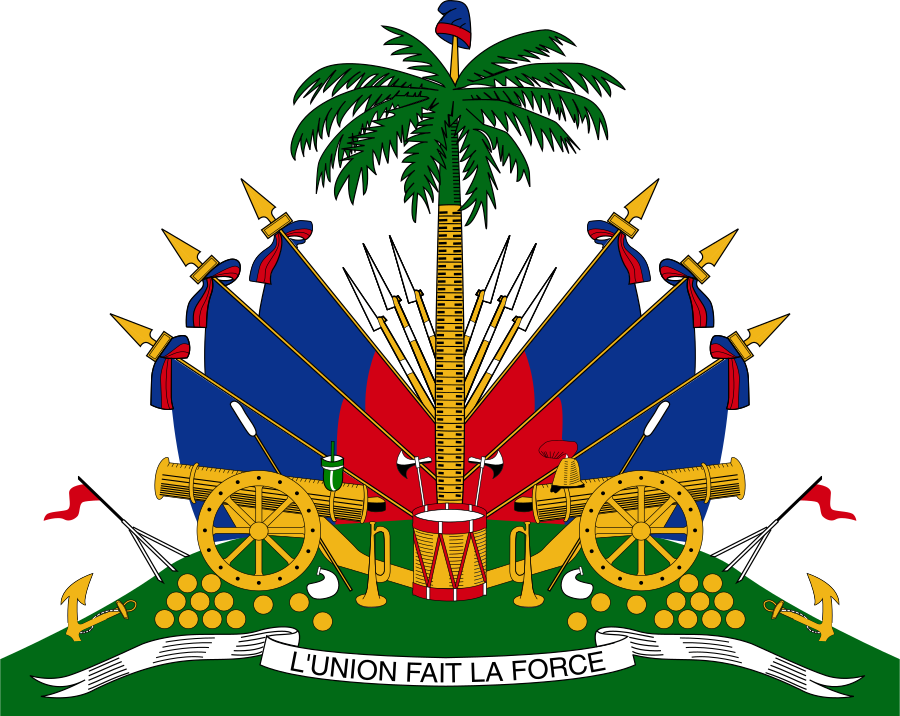
- Palm tree
- resilience and independence
- Liberty cap
- liberty — atop the palm (Duvalier removed it; it returned in 1986)
- Cannons, rifles, drums, bugles
- the army that won independence, and sovereignty
- Six flags
- the unity and strength of the nation
- Anchors
- the country's island and maritime character
- Broken chains
- the end of slavery
- “L'Union Fait La Force”
- in unity there is strength
18 May is Flag Day (Fèt Drapo). It is celebrated every year across the country and in the diaspora — especially in Arcahaie, the “flag city” — to honor unity, independence, and national identity.
Sources
- Embassy of Haiti — Flag and Coat of Arms
- Wikipedia — Flag of Haiti
- Encyclopædia Britannica — Flag of Haiti
The flag and coat-of-arms images are from Wikimedia Commons (public domain — national symbols).