Martelly and Privert: what did the school-fee lawsuit allege?
A group of U.S. residents challenged the transfer and call charges. Here are their allegations, the court’s response and the limits of the evidence.
An examination of documented information, with interpretations clearly identified.
Listen in Haitian Creole
Synthetic narration · ElevenLabs. Read the Haitian Creole transcript
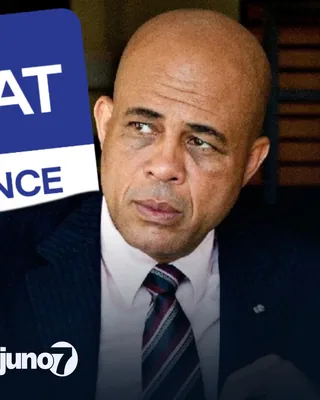
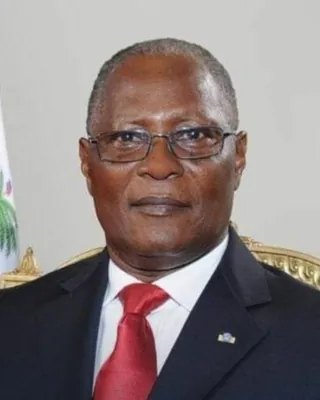
In 2018, a group of U.S. residents sued in New York. They said money charged on transfers and calls to Haiti had not served its promised purpose. They accused Martelly and money-transfer and telephone companies of agreeing to impose unlawful fees. They accused his successors, Jocelerme Privert and Jovenel Moïse, of continuing and benefiting from the arrangement. [1] [2]
Their central accusation was serious: companies and presidents had allegedly kept some of the money presented as school funding. That was the plaintiffs’ claim, not an established finding of theft. [2]
Understanding the complaint requires separating two charges. Central-bank circulars concerned money transfers. A presidential order concerned international calls: as recounted by the court, five cents of a minimum 23-cent-per-minute price was to go to CONATEL, Haiti’s telecommunications regulator. The stated purpose of that call fee was fighting telephone fraud. The plaintiffs challenged the gap between those texts and the school promise. [2]
What did the courts decide? In 2022, an appeals court reopened the path for the case to proceed. That did not prove the allegations. In 2023, the judge dismissed several claims, including fraud claims, while allowing Communications Act claims to proceed. [1] [2]
In 2025, the court imposed a $5,000 penalty on two plaintiffs’ lawyers concerning claims against Unibank and Unitransfer. That penalty was not imposed on the former presidents. [3]
This is a civil case; these decisions are not criminal convictions. An accusation can raise an important question without answering it. For the school-money question, evidence of receipts and spending remains essential.